
In an era where genres like electronic pop, lo-fi, and cinematic ambient dominate playlists, the process of music creation is evolving faster than ever. Artificial intelligence is no longer just a studio assistant — it’s becoming the co-composer. Modern musicians and creators now rely on AI music creator platforms to compose, produce, and remix songs that sound as human as they feel.
Among these tools, MusicCreator AI stands out for its text-to-music synthesis and lyric generation capabilities, making it easier for anyone—from amateurs to professionals—to craft compelling tracks in minutes. Alongside MusicCreator AI, platforms like Brev AI and Mubert are redefining what “making music” means in a digital-first world.
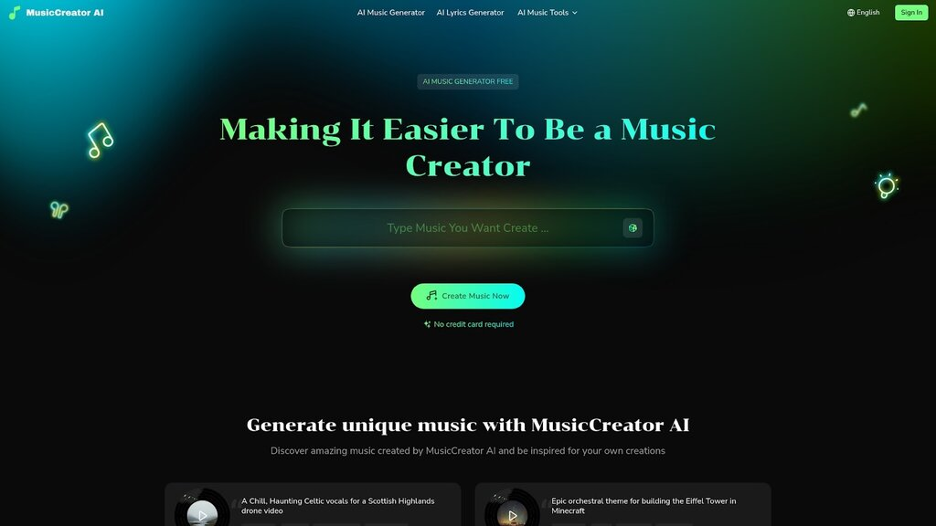
MusicCreator AI: Turning Words into Soundscapes
Purpose: Revolutionizing Music Accessibility
MusicCreator AI was designed to simplify the production journey. Instead of struggling with complex sound engineering software, users can now generate high-quality music by simply inputting text prompts. Whether you type “a nostalgic piano melody with subtle electronic beats” or “upbeat summer pop,” the AI understands tone, tempo, and emotion — delivering studio-quality audio instantly.
Core Capabilities: Beyond Traditional Composition
This AI Music Generator merges natural language processing with generative sound modeling. It’s capable of transforming lyrical ideas into fully produced songs, aligning beats and harmonies with emotional cues. Moreover, it includes a built-in lyric generator, allowing artists to co-write with AI that adapts to genre, rhythm, and mood.
What makes MusicCreator AI impressive isn’t just automation—it’s personalization. The platform learns user preferences over time, suggesting chord progressions, instrument layers, and vocal textures based on previous projects.
User Experience: Creating Music at the Speed of Thought
From a creator’s perspective, MusicCreator AI feels like a creative partner rather than a cold machine. In testing, generating a full 2-minute demo took under 60 seconds, while the AI’s adaptive engine refined the sound each time feedback was given. It’s this dialogue-like process that bridges creativity and technology, giving every artist a unique sonic fingerprint.
Brev AI: Where Technical Precision Meets Emotional Depth
Vision: Human Expression, Machine Efficiency
Brev AI is built for composers who value both structure and spontaneity. While many AI music creator tools focus on loops or beats, Brev AI leans into arrangement intelligence — guiding creators to construct full tracks with coherent progression, key transitions, and balanced instrumentation.
Distinctive Features: Intelligent Arrangement and Mixing
Its standout capability lies in its context-aware audio modeling. The system doesn’t just piece sounds together; it analyzes how instruments interact across sections. For instance, if a melody builds emotional tension, Brev AI automatically modulates background textures to maintain narrative flow.
Beyond sound generation, it offers real-time mixing suggestions—an often-overlooked feature that drastically improves workflow. When tested with electronic jazz samples, the AI’s automatic EQ adjustments enhanced clarity without dulling warmth, showing how machine learning can understand audio aesthetics as much as analytics.
Ideal Users: Producers and Sound Engineers Alike
Brev AI appeals to producers who demand structure but want to accelerate their process. Its data-driven mixing and adaptive composition features make it an ideal co-producer for professionals who already understand the creative rules—and are ready to let AI bend them.
Mubert: The Sound of Infinite Imagination
Concept: Continuous Creativity Without Boundaries
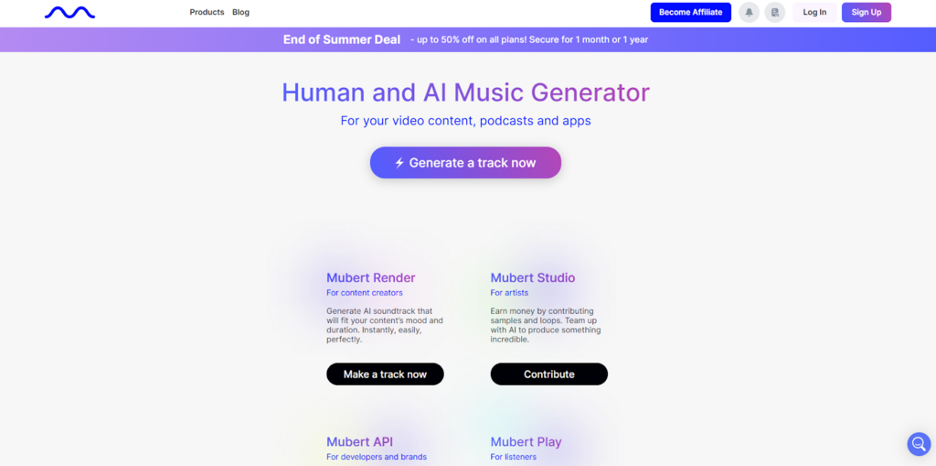
Unlike traditional AI music creator tools that focus on one-time track generation, Mubert operates like a living ecosystem of sound. It uses an algorithmic streaming model, generating continuous, royalty-free audio in real time. For content creators, game developers, and streamers, Mubert provides endless dynamic soundscapes perfectly tuned to specific moods or activities.
What Sets It Apart: Adaptive Streaming Intelligence
Mubert’s database is built from millions of samples, categorized not by genre but by feeling. Users can input prompts such as “energetic morning routine” or “deep focus night session,” and Mubert will deliver a seamless, evolving soundtrack that never loops exactly the same way twice.
The platform’s AI continuously adjusts tempo and layering based on user interactions—making it particularly powerful for live content or VR applications where reactive soundscapes elevate immersion.
Pros and Cons: Fluid Yet Specialized
While Mubert’s innovation lies in its generative streaming model, it’s less suited for creators looking to produce specific, finished tracks. Instead, it thrives in dynamic contexts—fitness apps, livestreams, and background music automation. Yet, its smooth blending of machine precision and emotional tone proves that the future of audio lies in infinite adaptability.
The Market Shift: Why AI Is Redefining Music Creation
The global market for AI-generated music is projected to surpass $3 billion by 2030. The reason? Accessibility. What once required expensive studios and years of training can now be achieved by anyone with an idea and a laptop.
Each AI music creator tool contributes differently:
- MusicCreator AI democratizes composition and lyrics.
- Brev AI enhances technical refinement and structural logic.
- Mubert reimagines perpetual, adaptive sound design.
Together, they’re building an ecosystem where inspiration doesn’t wait for instruments or expertise. AI is shifting creativity from the hands of the few to the imaginations of the many.
Comparing the Experience: Emotion vs. Efficiency
Testing across these three tools reveals a fascinating spectrum. MusicCreator AI leans into emotional expressiveness, Brev AI perfects technical structure, and Mubert emphasizes experiential immersion.
For example, composing a cinematic score with MusicCreator AI felt intuitive—its text-to-music prompts captured the emotional weight of a scene effortlessly. Brev AI’s algorithm, on the other hand, delivered a more structured sound with professional-grade transitions. Mubert, in contrast, made background composition feel alive, generating endless audio evolution suitable for modern creators who value constant freshness.
This diversity shows how AI Music Creator platforms are no longer competing in the same lane; they’re uilding complementary futures for different kinds of artistry.
Final Thoughts: The Future Sounds Intelligent
AI’s role in music is not a passing trend but a new creative paradigm. As tools like MusicCreator AI, Brev AI, and Mubert continue to mature, the relationship between humans and algorithms will only deepen—blending intuition with intelligence.
Whether you’re a bedroom producer seeking inspiration or a studio engineer aiming for efficiency, today’s AI music creator tools are shaping a more inclusive and dynamic musical landscape.
Tomorrow’s hit song may begin not with an instrument—but with an idea, a prompt, and the limitless imagination of artificial intelligence.