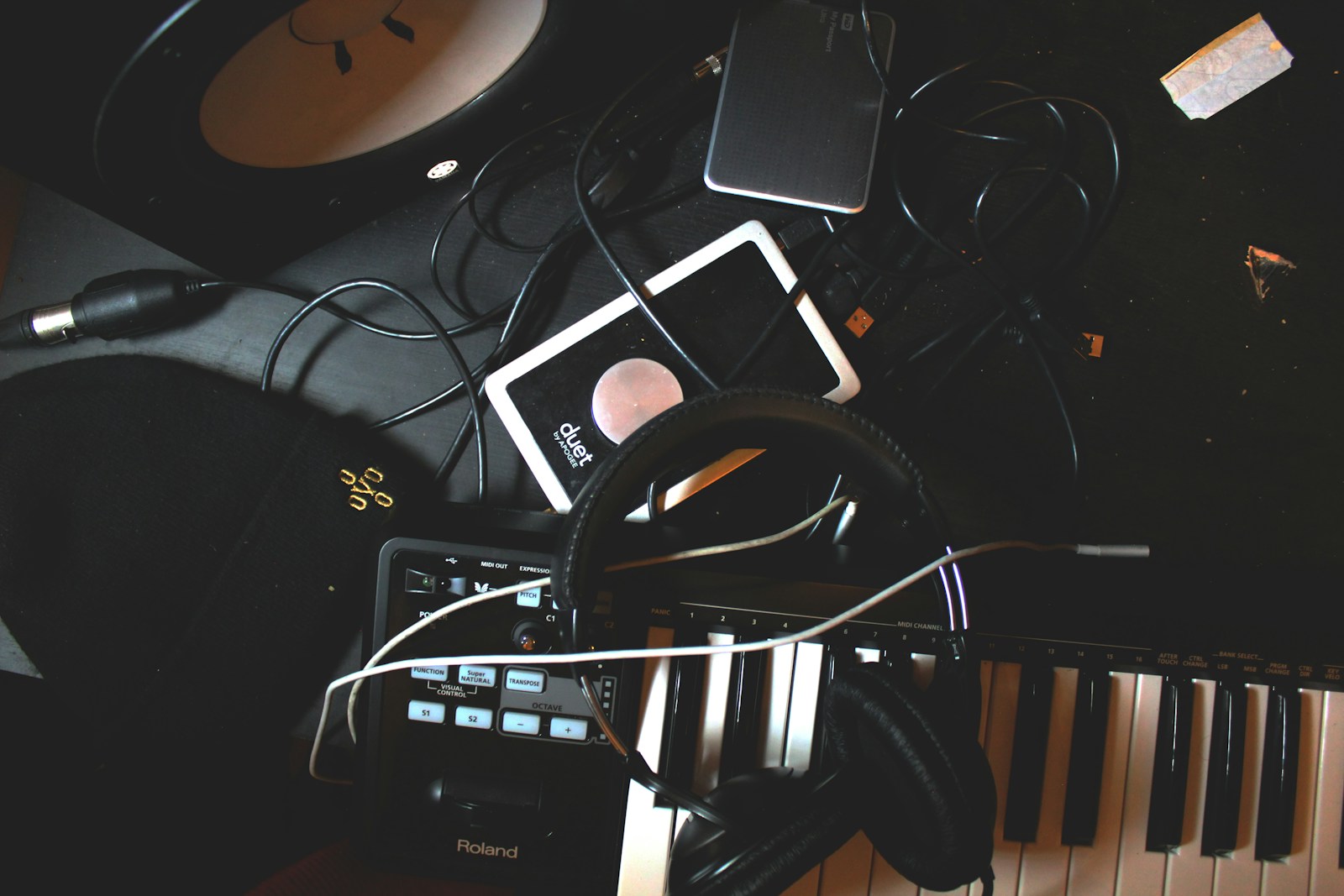

Music production has always been a mirror of the tools available to its creators. Decades ago, creating a professional-sounding album required massive mixing consoles, physical tape reels, and expensive studio spaces. The gatekeepers of the recording industry held absolute power over who got heard because they owned the infrastructure.
Things look radically different now. The democratization of audio gear and software has leveled the playing field, making it possible for a teenager in a bedroom to engineer a multi-platinum hit. Understanding how these sonic changes happened gives deep insight into where popular music is heading.
From Analog Warmth to Digital Precision
The heart of early recorded music beat inside large, acoustically treated rooms. Studios relied entirely on analog hardware—solid-state consoles, tube microphones, and magnetic tape. This gear introduced subtle distortion, tape hiss, and harmonic saturation that human ears naturally perceive as pleasing and “warm.”
When digital recording emerged via Digital Audio Workstations (DAWs) in the late 1990s and early 2000s, it brought infinite flexibility but a cold, clinical precision. There was no tape hiss, but there was also no natural warmth. Producers quickly realized that perfect clarity could sound sterile. This tension sparked a massive industry: creating digital plugins that painstakingly mimic the imperfections of old analog gear.
The Rise of the Bedroom Producer
The shift from physical hardware to software meant that thousands of dollars of rack mount equipment could suddenly be replaced by a laptop. Software like FL Studio, Ableton Live, and Logic Pro turned computers into complete production suites.
This access changed the actual composition of music. Instead of relying on a live drummer or a traditional bass player, creators began leaning into synthesized sounds, intricate sample chopping, and digital step-sequencers. The result was a massive boom in electronic-heavy genres, particularly hip-hop and trap, which quickly became the dominant forces in global pop music.
The Art of Sampling and Cultural Curation
No discussion of modern music evolution is complete without examining the art of the sample. Taking a snippet of an existing recording and repurposing it into a brand-new composition is one of the most significant artistic developments of the last fifty years.
Producers became crate diggers, searching through obscure vinyl records to find a specific drum break or vocal flourish. This technique transformed the producer from a behind-the-scenes engineer into a primary artist.
Few figures illustrate this shift better than the innovators who bridged soul music with hard-hitting street beats in the early 2000s. Reading through Kanye West biography reveals exactly how a producer can completely alter the sonic landscape of an entire decade. By speeding up old soul vocal samples—a technique often called “chipmunk soul”—and layering them over heavy drums, the entire trajectory of hip-hop shifted away from the gritty, minimalist sounds of the late 90s into a grander, more cinematic era.
Sonic Saturation
Harmonic saturation occurs when an audio signal is driven through an analog circuit, adding subtle overtones that make the sound feel fuller, thicker, and more present in a mix.
How Streaming Changed the Mix
The way people consume music directly affects how it is produced. In the era of physical vinyl records or CDs, albums were mastered to sound cohesive from the first track to the last. The listener was expected to sit down and listen to the project as a whole.
The rise of streaming platforms changed the game. Music is now consumed via massive, algorithmic playlists where a song has only a few seconds to capture a listener’s attention before they press “skip.” This has forced a major evolution in mixing and arrangement strategies.
-
Shorter Intros: Song introductions have shrunk dramatically. Instead of a 30-second musical buildup, many tracks dive straight into the hook or the main vocal line within the first five seconds.
-
The Loudness Wars: Songs are mastered significantly louder than they were thirty years ago. While streaming algorithms now use loudness normalization to balance tracks, producers still mix elements to be punchy, forward, and instantly aggressive on small smartphone speakers or wireless earbuds.
-
Minimalist Arrangements: High-end studio monitors can reproduce a massive wall of sound cleanly. Consumer headphones cannot. Modern mixes are often surprisingly sparse, featuring just a few core elements—like a heavy 808 bass, a crisp snare, and a dry vocal—giving each element maximum space to punch through small consumer speakers.
Human Versus Machine: The Quantization Debate
One of the most powerful features of digital music software is quantization—the ability to snap every single drum hit or note perfectly onto a rhythmic grid. On paper, perfect timing sounds ideal. In practice, it can strip away the rhythmic nuance that makes music feel alive.
Human musicians naturally play slightly ahead of or behind the beat. A drummer dragging their sticks just a millisecond late creates a relaxed, laid-back “groove.” When everything is perfectly locked to a digital grid, that groove disappears, replaced by a stiff, robotic feel.
| Production Element | Analog Era Era | Digital Era |
| Timing | Human groove, slight natural variance | Quantized grids, micro-timing adjustments |
| Storage | Limited by physical tape length (e.g., 24 tracks) | Unlimited tracks and virtual takes |
| Editing | Physical tape cutting, destructive editing | Non-destructive editing, infinite “undo” |
| Sonic Profile | Harmonic warmth, natural room acoustics | High fidelity, clinical clarity, digital emulation |
To fight this digital rigidity, modern software now includes “humanization” algorithms. Producers deliberately inject randomness back into their drum machines, micro-shifting high-hats and snares off the grid to capture that elusive, natural human feel while maintaining the power of digital instruments.
The Future of the Sonic Landscape
The tools will continue to evolve, but the core objective of music production remains unchanged: capturing emotion and transferring it to the listener. Whether a track is recorded using a million dollars of vintage gear or mixed on a cheap laptop using a cracked software plugin, the ultimate test is how it resonates with the human experience. As technology moves forward, the most successful producers will always be those who use the machines to amplify human emotion, rather than replace it.