
Inheriting a stamp collection often brings a unique mix of emotions. On one hand, you hold a fascinating piece of history, a personal legacy carefully curated by a parent, grandparent, or relative over decades. On the other hand, opening a box packed with thick albums, glassine envelopes, and loose paper scraps can feel overwhelming. If you have never collected stamps yourself, the world of philately—the study and collection of postage stamps—can seem like an opaque puzzle filled with foreign scripts, tiny numbers, and unfamiliar historical terms.
Where do you even begin? How do you separate common postage from potential hidden gems without damaging the items? This practical guide walks you through the initial steps of identifying, handling, and organizing an inherited stamp collection efficiently and safely.
Rule Number One: Do No Harm
Before you start sorting through pages or pulling items out of boxes, remember the most critical rule of stamp handling: preserve the collection exactly as you found it. Well-meaning heirs often accidentally destroy significant monetary and historical value by trying to “clean up” or reorganize a collection too quickly.
Here are four essential preservation rules to keep in mind:
-
Never tear stamps off paper: If you find stamps still attached to envelopes, postcards, or paper clippings, leave them intact. Stamps on original envelopes—known in collecting circles as “covers”—are often worth considerably more attached to their original mailing than if they were removed. The postmarks, transit markings, and historical context add vital provenance.
-
Avoid bare fingers when possible: The natural oils and moisture on your hands can transfer to fragile stamp paper and original gum, causing staining or yellowing over time. Use flat-tipped stamp tongs (specialized, smooth-jawed tweezers) to handle loose stamps.
-
Keep stamps away from tape and adhesives: Never use household tape, standard glue, or self-adhesive stickers to mount or repair loose stamps. Specialized stamp hinges or clear archival mounts are the only acceptable ways to secure stamps to pages.
-
Store items in a cool, dry place: Heat and humidity are the greatest enemies of vintage paper. Keep albums lying flat in a climate-controlled room away from direct sunlight, basements, and humid attics.
Understanding the Visual Clues on a Stamp
Identifying an unfamiliar stamp requires looking closely at its physical features. Every stamp carries tiny clues that point to its country of origin, year of issue, and classification.
1. Country Name and Inscriptions
Most stamps state the issuing country’s name, though not always in English. For example, Helvetia refers to Switzerland, Magyar Posta signifies Hungary, Bayern points to historical Bavaria, and Nippon indicates Japan.
There is one major exception: Great Britain. As the country that issued the world’s first adhesive postage stamp (the Penny Black in 1840), British stamps do not include the country name; instead, they display a silhouette or portrait of the reigning monarch.
2. Denomination and Currency
The face value printed on the stamp provides another hint. Identifying the currency symbol (such as pfennigs, centimes, reis, or schillings) helps narrow down the issuing region and era, especially for defunct empires or mid-20th-century colonial issues.
3. Cancellations and Postmarks
A postmarked stamp is categorized as “used.” While light cancellation marks leave the main design legible, heavy ink smudges can obscure details. However, postmarks can also provide valuable clues, such as the exact city and date of mailing.
4. Perforations and Physical Varieties
Look at the edges of the stamp. Are they cut clean with straight edges (imperforate), or do they feature small hole punches along the sides (perforated)? Early stamps from the 1840s and 1850s were often issued without perforations and had to be cut from sheets with scissors.
Speeding Up Identification with Modern Tools
Historically, identifying an unknown stamp required flipping through multi-volume physical catalogs like Scott, Stanley Gibbons, or Michel. For non-collectors inheriting hundreds of items, this manual lookup process could take weeks or months.
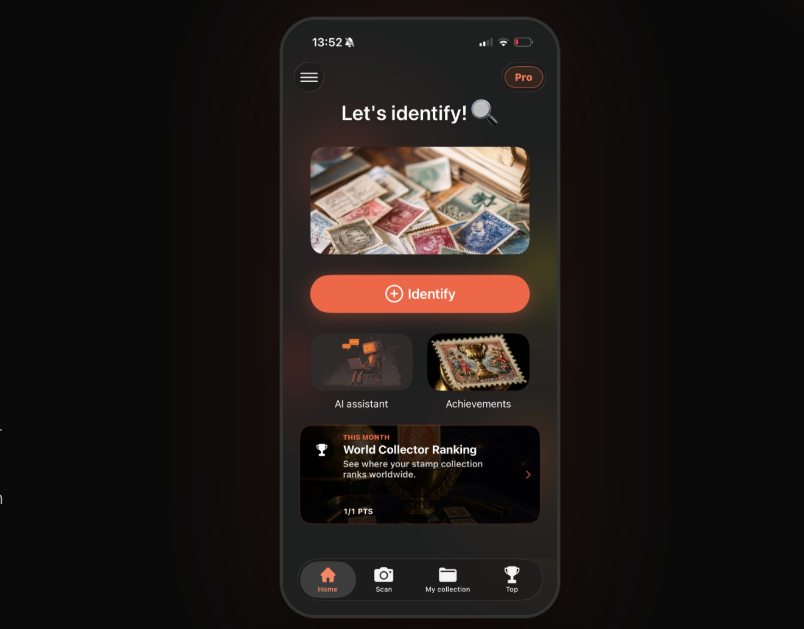
Fortunately, mobile technology has dramatically simplified the process. iPhone users can streamline their initial inventory using Stampy, a mobile application designed to identify postage stamps directly from a clear smartphone photo. By analyzing visual features, design patterns, and inscriptions, the app returns structured issue details, historical background, and country context in seconds.
Using an image recognition tool allows you to make a fast first pass through albums. You can identify mystery items, catalog key information, and build a digital record of your inherited pieces without needing prior expertise in catalog numbering systems.
What Determines a Stamp’s Value?
Once you know what a stamp is, the next natural question is: What is it worth?
It helps to approach valuation with realistic expectations. The vast majority of 20th-century stamps—especially colorful commemorative issues produced between 1940 and 1990—were printed in the hundreds of millions. Most inherited collections hold deep sentimental value, but their market resale value may be modest.
However, about 10% of inherited collections do contain notable rarities, early issues, or valuable error varieties. Value is primarily driven by three factors:
-
Rarity and Mintage: How many copies were originally printed, and how many have survived in good condition? Stamps from short-lived postal administrations or tiny print runs command higher interest.
-
Condition: Condition is paramount in philately. An unused stamp with its original gum intact (Mint Never Hinged) is worth significantly more than a heavily cancelled copy. Centering (how evenly the image sits within the borders), perforation integrity, and color freshness heavily influence price.
-
Errors and Misprints: Stamps with unintended production defects—such as inverted center designs, missing colors, or incorrect perforation measurements—are among the most sought-after items in collecting.
To help evaluate what you hold, the Stampy stamp identifier app offers estimated value context alongside its visual identification results. By drawing on market comparisons and catalog reference data, the app gives users a realistic starting estimate for individual items. Keep in mind that estimated values serve as an informational benchmark rather than a guaranteed transaction price; actual realized prices depend on buyer demand, individual grade, and current market conditions.
Organizing and Deciding Next Steps
After completing an initial identification sweep, structure your collection into logical categories:
-
High Priority / Research Further: Pre-1930 stamps, mint unhinged issues, unusual overprints, early covers, or specialized single-country albums.
-
Common / Modern Issues: Post-1940 commemorative sets, modern kiloware (loose stamps cut from post), or common worldwide starter albums.
-
Unidentified / Mystery: Items with illegible script or unusual formats to revisit later.
When to Seek Professional Appraisal
If your initial identification efforts reveal rare early issues, complete high-value sets, or significant 19th-century collections, consider consulting a professional philatelic appraiser or a reputable local stamp dealer.
While mobile identification tools provide a convenient, accessible starting layer for cataloging and sorting, they are designed as research aids rather than substitutes for formal human expertization. High-value or potentially forged stamps should always be evaluated in person by a certified specialist before being bought or sold.
Start Exploring Your Stamp Heritage
Inheriting a stamp collection is an invitation to explore history, geography, and art through tiny paper artifacts. Whether you choose to continue the hobby, pass the albums down to the next generation, or prepare them for sale, taking a structured approach ensures you make informed decisions every step of the way.
Ready to uncover the stories behind your inherited albums? Download Stampy on the App Store to scan stamps with your iPhone camera, explore issue details, view estimated value context, and organize your digital catalog effortlessly.