
Sunrise Alarm Clock vs. Traditional Alarm: Which Wake-Up Routine Fits You?
Key Takeaways
- A sunrise alarm works best with a consistent wake time and a room dark enough to notice the light change.
- A traditional alarm is the more dependable choice when the morning cannot be missed or your schedule shifts frequently.
- Most people who switch to a sunrise alarm still keep a backup; light alone is not a reliable single alert for heavy sleepers.
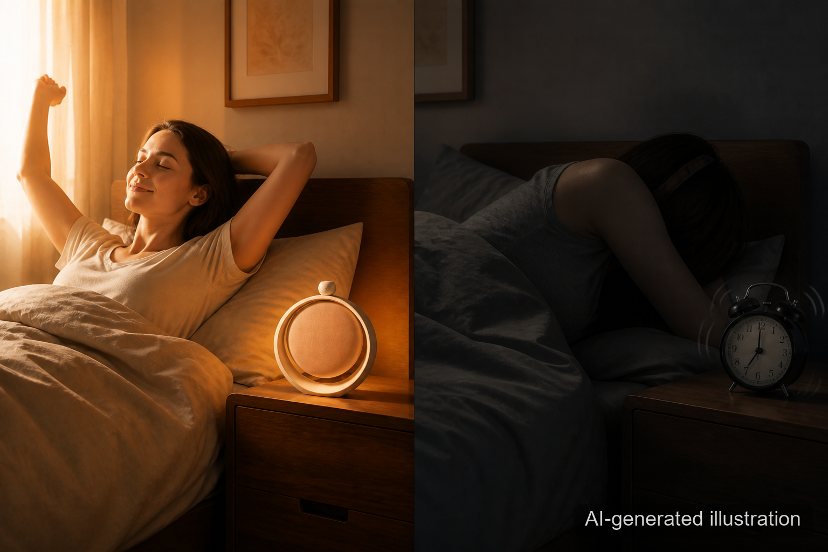
Some mornings you wake up feeling shaken awake by a stranger. Other mornings, you open your eyes and the day eased you in. The difference often comes down to how your alarm works, not when.
Sunrise alarm clocks and traditional alarms both get you out of bed, but they work differently, and neither is universally better. A sunrise alarm gradually increases light in your room before your set wake-up time, and may pair that with slowly rising sound. A traditional alarm fires a fixed tone or vibration at a precise moment. The right choice depends on your room, your schedule, your sensitivity to light and sound, and how much you trust the device when it matters.
Note: This content is for informational purposes only and is not intended as medical advice. If you have concerns about your sleep health, consult a qualified healthcare professional.
What Each Wake-Up Style Changes — and What It Does Not
| Factor | Sunrise Alarm | Traditional Alarm |
| How it triggers | Gradually brightens light before set time; may add slowly rising sound | Fixed tone, vibration, or both at set time |
| Dark room required? | More effective when the room is dark enough to notice the change | Works in any room condition |
| Partner impact | Light may disturb a light-sleeping partner | Sound may disturb a light-sleeping partner |
| Setup effort | Requires testing brightness, timing, and room placement | Minimal; set time and volume |
| Backup reliability | Varies by device; check whether it works without Wi-Fi or after a power outage | Phone or basic clock alarm is typically self-contained |
| Best fit for | Consistent wake times; light-sensitive risers; low-stimulation preference | Variable schedules; deep sleepers; anyone who needs an unmistakable cue |
The better choice depends on how you wake up and what your sleep environment is like. Choose a sunrise alarm if you prefer a gradual wake-up with less stimulation. Choose a traditional alarm if you need a clear, immediate cue or tend to sleep through gentler signals.
Who May Prefer a Sunrise Alarm Clock
You keep a consistent wake-up time. Sunrise alarms begin a light cycle before your alarm time, often 20 to 30 minutes, depending on the device. If your wake-up time shifts significantly day to day, that pre-light window may interrupt sleep rather than ease the transition.
Your bedroom stays dark in the morning. Blackout curtains, basement rooms, or north-facing windows mean natural light isn’t already doing the work. A gradually brightening bedside device can create a visual cue your body can respond to before sound kicks in.
You find abrupt sounds jarring. If you flinch at your current alarm (or hit snooze reflexively because the tone feels startling rather than alerting), a lower-stimulation approach may suit you better.
You’re building a more intentional morning routine. Reducing phone use in bed, creating a gentler start before the day hits: a light-based alarm fits naturally into a consistent bedside sleep routine.
You’re patient with setup. Sunrise alarms need a few test mornings to dial in: brightness level, gradual-sound timing, room response. If you’re willing to tune it, the payoff can be worth it.
Who May Prefer a Traditional Alarm
You need an unmistakable, immediate alert. Deep sleepers, early flights, caregiving responsibilities: when missing an alarm has real consequences, a clear sound alarm is the more dependable choice. Light alone is not a reliable single alert for heavy sleepers.
Your wake-up time varies frequently. Shift workers, parents of young children, people with irregular travel: anyone who sets a different alarm most nights may find a sunrise clock’s pre-light cycle more disruptive than helpful.
You share a bedroom with a light-sensitive partner. A gradual brightening starting 20–30 minutes early can disturb someone who isn’t waking at the same time. A phone alarm with headphones or a low-volume vibrating clock may be less intrusive.
Space or budget is a constraint. A phone alarm is free. A standalone sunrise clock adds a device and typically costs more than a basic clock. If it doesn’t solve a real problem for you, it’s not worth the trade-off.
You’re simply used to it. Habit has real value. If you already wake up reliably and feel reasonably okay in the mornings, there’s no compelling reason to switch.
The Hybrid Setup: Use Light, Sound, and a Backup
A hybrid setup combines a gradual wake-up with a defined alarm, giving you both a gentler start and a reliable fallback. Light and gradually increasing sound can ease you into waking, while a backup alarm provides a clear cutoff point if you are not fully awake yet.
If you prefer a hybrid setup:
- Test the setup for several days before relying on it for an important morning.
- Set the backup alarm a few minutes after the gradual wake-up is scheduled to begin.
- Confirm that the device can keep the alarm active through a power outage or app disconnect, since not all devices can.
A well-configured setup can give you a gentler start without giving up the certainty of a defined wake-up time. Test it in your own room first, since light levels, sound, and your sleep environment can all affect how well it works.
How to Set Up a Less Abrupt Morning Routine
A few habits make more difference than the device:
Fix your alarm time and keep it consistent. Your body adjusts to a regular wake-up time over days and weeks. Varying it by more than an hour most days makes any alarm harder to respond to.
Test brightness and volume before you rely on it. Run a light-based alarm while you’re awake first. See how much light actually fills the room, and whether the sound ramp-up is noticeable at the level you’ve chosen.
Put your phone somewhere that requires you to stand up. Much of why traditional alarms feel harsh is the snooze-and-scroll loop that follows. Moving your phone across the room makes it easier to actually get up.
Give the new setup two weeks. Any morning change feels uncomfortable at first. Expect an adjustment period before judging whether it’s working.
A Bedside Routine Can Do More Than Set an Alarm
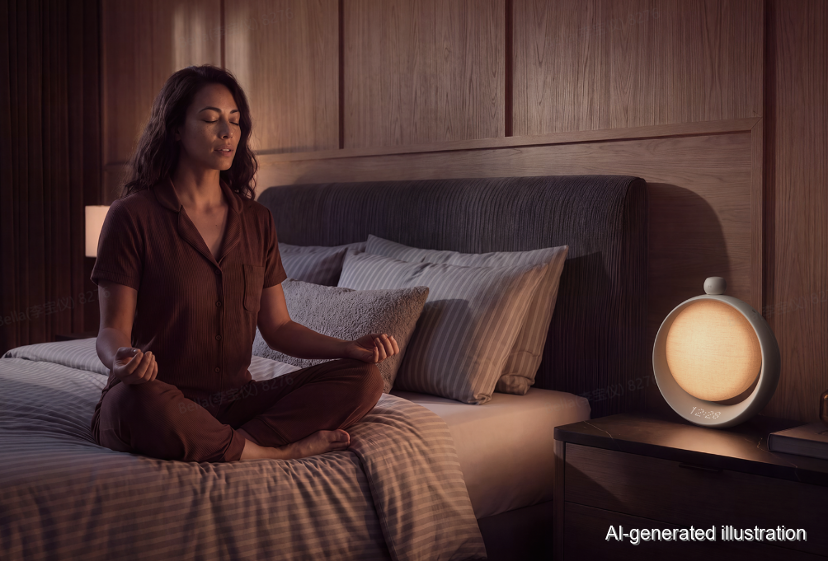
For some people, the appeal of a sunrise alarm isn’t just the wake-up—it’s removing the phone from the equation entirely.
A device that handles sleep sounds, ambient lighting, a wind-down routine, and a gradual alarm in one place means fewer reasons to pick up a phone after the lights go out. You can set an alarm, adjust the room, and follow a consistent pre-sleep routine without opening an app or seeing notifications.
The Anker soundcore SleepLab is a sleep sound machine built around that idea. It brings built-in sleep sounds and multi-color ambient lighting to help you wind down, physical controls so you can adjust sound and light without reaching for your phone, and a sunrise simulation paired with gradually rising sound for the morning. A battery-backed alarm keeps your wake-up on schedule even through a power outage.
If you’re considering a sunrise alarm, the best way to know whether it works for you is to try it as part of your regular routine. Give it a few mornings and see whether the gradual light and sound help you wake more comfortably.
Conclusion
The goal isn’t to find the gentlest alarm or the loudest one. It’s to find a wake-up method that works with the way you actually sleep.
For some mornings, that may be a sunrise alarm that eases you into the day. For others, it may be a traditional alarm that leaves no room for doubt. And when you want both, a gradual wake-up with a reliable backup can give you the best of both approaches.
Whichever you choose, try it on a few ordinary mornings first. That way, you’ll know what works for you before you need to rely on it.
Frequently Asked Questions
Do sunrise alarm clocks work better than regular alarms?
Not universally. A sunrise alarm suits people who prefer a gradual light cue before their set wake-up time; a regular alarm fits better when an immediate, unmistakable reminder is essential.
How long before wake-up time does a sunrise alarm start?
It varies by device and setting. Many sunrise alarms begin brightening before the scheduled wake-up time, so check the available duration and test it in your own room before relying on it for an important morning.
Is a gentle wake-up alarm enough for heavy sleepers?
Often not. If you sleep through alarms or need to be up for work, travel, or caregiving, use a backup alarm and test the setup over several mornings before relying on light and sound alone.
Can a sunrise alarm replace a phone alarm?
It can be part of a phone-free bedtime routine, but only after you confirm how the device behaves during a power outage or when the app isn’t running.
Do I need a dedicated sunrise alarm device, or can a phone app do the same thing?
A phone app can be a low-cost way to test whether you respond to this style of waking before buying a dedicated device. The trade-off is that a phone on the nightstand brings back the same notification and screen-check habits you’re trying to move away from, and a phone screen rarely fills a room with the kind of light a bedside device produces.