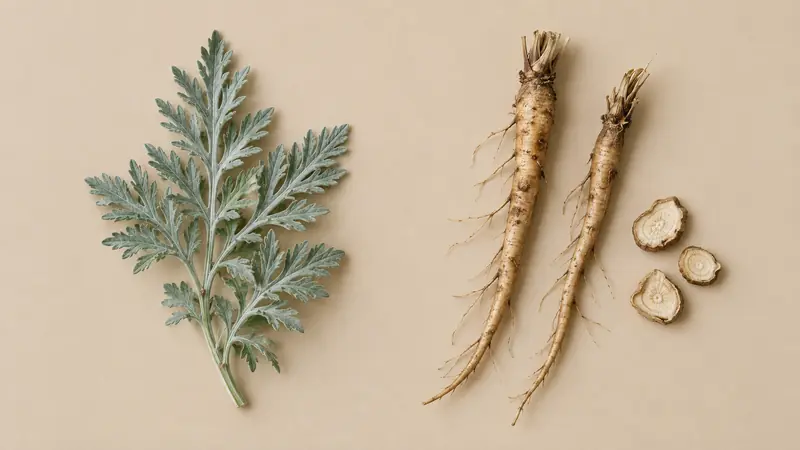

Wormwood vs dandelion root bitters is a comparison between an aromatic aerial herb and an earthy root. Both ingredients appear in bitter-herb supplements, but they differ in taste, preparation, characteristic compounds, and safety questions. This guide explains what those differences mean when you read a product label.
HerbEra takes a label-first editorial view of this category. Botanical identity, plant part, extract format, serving amount, and testing details provide more useful information than broad wellness language on the front of a bottle.
What Is the Main Difference Between Wormwood and Dandelion Root?
Wormwood products generally use the aerial parts of Artemisia absinthium. Dandelion root products use the underground parts of Taraxacum officinale. Wormwood has a sharp and aromatic bitterness. Dandelion root tastes earthy and mildly bitter, with a flavor that changes noticeably after roasting.
| Comparison point | Wormwood | Dandelion root |
|---|---|---|
| Botanical name | Artemisia absinthium L. | Taraxacum officinale F.H. Wigg. |
| Botanical family | Asteraceae | Asteraceae |
| Plant part | Herb or aerial parts | Root or underground parts |
| Taste profile | Sharp, aromatic, dry, and intensely bitter | Earthy, root-like, moderately bitter, or toasted when roasted |
| Notable constituents | Absinthin, related sesquiterpene lactones, and volatile compounds | Inulin, phenolic acids, triterpenes, and sesquiterpene lactones |
| Thujone question | Relevant because some preparations may contain thujone | Thujone is not a characteristic constituent |
| Common formats | Tincture, glycerite, capsule, tea, or blend | Raw or roasted tea, tincture, glycerite, capsule, powder, or blend |
Why Does the Plant Part Matter?
The plant part helps define the chemical and sensory profile of an herbal ingredient. Aerial herbs contain leaves, stems, and sometimes flowering tops. Roots store a different mixture of carbohydrates, bitter constituents, and structural compounds.
Wormwood aerial parts
Wormwood labels should identify the herb or aerial parts. Its pronounced bitterness comes mainly from sesquiterpene lactones such as absinthin. Its aromatic character comes from volatile components, which can vary by plant chemotype, harvest, storage, and extraction method.
Dandelion underground parts
Dandelion root labels should state root or underground parts. The root contains inulin, several phenolic acids, triterpenes, and bitter sesquiterpene lactones. A product made from root alone is different from one made with dandelion root and herb.
Do not assume that the word dandelion always means root. Some products use the leaf, while others combine the root with aerial material. The Supplement Facts panel or equivalent botanical declaration should identify the exact plant part.
How Do Raw and Roasted Dandelion Root Differ?
Raw and roasted dandelion root have different sensory profiles. Raw root tends to taste earthy, woody, and mildly bitter. Roasting darkens the material and creates deeper toasted, nutty, or coffee-like notes.
Roasting also changes the root’s chemical profile. The degree of change depends on temperature and time. A roasted powder should not be assumed to match an unroasted extract, even when both labels list the same botanical species.
Roasted dandelion root commonly appears in beverage-style products. Unroasted root appears more often in capsules, liquid extracts, teas, and multi-herb bitters. A transparent label should state when the root has been roasted.
Wormwood is not normally evaluated through a roasted-versus-raw choice. Its more useful label questions concern species, aerial plant part, solvent, extract ratio, volatile fraction, and thujone specification.
What Changes Between a Tincture and a Glycerite?
A tincture traditionally uses ethanol as an extraction solvent. A glycerite uses vegetable glycerin, usually with water. Retailers sometimes use alcohol-free tincture as a general name for a glycerin-based liquid extract.
The solvent affects which plant constituents enter the finished liquid. Water, glycerin, and ethanol have different extraction properties. Two products made from the same herb may therefore have different chemical profiles, concentrations, flavors, and shelf-life requirements.
| Format | Typical characteristics | Label details to check |
|---|---|---|
| Alcohol tincture | Ethanol and water extract a broad range of botanical constituents | Alcohol percentage, extract ratio, plant part, and serving size |
| Glycerite | Glycerin adds sweetness and can soften the perception of bitterness | Glycerin-to-water mixture, preservatives, ratio, and storage directions |
| Capsule | Contains powdered herb, dry extract, or both without a liquid solvent in the serving | Ingredient form, milligrams, extract ratio, and added materials |
| Tea or roasted beverage | Uses hot-water preparation and may emphasize flavor over concentration | Raw or roasted status, grams per serving, and brewing directions |
Alcohol-free does not automatically mean thujone-free when wormwood is present. Only a suitable specification or finished-batch analysis can answer that question. Dandelion root does not carry the same characteristic thujone issue.
How Should You Read a Bitters Label?
Begin with the scientific name. Wormwood should appear as Artemisia absinthium. Dandelion root should appear as Taraxacum officinale. Similar common names do not provide enough precision for a botanical supplement.
Next, identify the plant part and preparation. Look for aerial parts, root, raw root, roasted root, powdered herb, dry extract, liquid extract, tincture, or glycerite. These terms describe materially different ingredients.
When comparing HerbEra’s alcohol-free wormwood herbal drops with a dandelion root product, first determine whether the second product is a single-herb extract, a roasted beverage, or a multi-herb bitters formula. Products from different format categories should not be compared by drop count or front-label wording alone.
Check the amount per serving. Milliliters and milligrams provide more consistent reference points than drops because drop size can change with liquid viscosity and dropper design. An extract ratio adds context, but it does not reveal the amount of every constituent.
Read the Other Ingredients panel for glycerin, water, ethanol, flavors, sweeteners, preservatives, and carrier materials. For wormwood, look for a thujone statement or relevant testing information. For roasted dandelion root, check whether the degree or method of roasting is disclosed.
Which Ingredient Fits Different Product Preferences?
Wormwood may fit a preference for concentrated, sharp, aromatic bitterness in a liquid or capsule. Dandelion root may fit a preference for a milder earthy profile, a roasted beverage, or a familiar root-based ingredient.
Neither plant is universally better. The practical choice depends on taste, solvent preference, product format, ingredient transparency, and personal safety considerations. A single-herb product makes the source of bitterness easier to identify. A blend may offer a more complex flavor but makes individual ingredient amounts harder to compare.
What Safety Details Require Attention?
Wormwood requires careful review because some preparations contain alpha-thujone and beta-thujone. Their levels vary with the plant material and extraction method. Low-thujone material and clear testing information offer more useful safety context than taste or marketing descriptions.
Wormwood essential oil is not interchangeable with a tea, glycerite, capsule, or properly formulated liquid extract. Essential oils can contain concentrated volatile compounds and require a separate safety assessment.
Both wormwood and dandelion belong to the Asteraceae family. People with known sensitivity to this botanical family should review the possibility of an allergic response. Dandelion root products also vary because some contain root alone while others include leaf or whole-plant material.
Pregnant or breastfeeding people should not casually use concentrated wormwood preparations. Anyone with a seizure history, significant digestive or gallbladder concerns, allergies, or ongoing medication use should ask a qualified clinician or pharmacist whether a specific formula is appropriate.
Bitters Product Comparison Checklist
Use this checklist when comparing wormwood and dandelion root products. It focuses on label facts that affect identity, format, and product quality.
Verify the botanical species
Confirm Artemisia absinthium for wormwood or Taraxacum officinale for dandelion. Avoid relying on a broad common name.
Find the plant part
Look for aerial parts in a wormwood product and root in a dandelion root product. Check whether dandelion leaf or herb is also present.
Check raw or roasted status
Dandelion root should state whether it is roasted when that processing step defines the product. Roasting changes flavor and composition.
Identify the format
Determine whether the product is a tincture, glycerite, capsule, powder, tea, or multi-herb blend.
Read the extraction details
Check the solvent, extract ratio, serving amount, and any standardization information.
Review thujone disclosure
For wormwood, look for a specification or relevant batch testing. Do not estimate thujone from bitterness.
Read every warning
Check age restrictions, allergy notes, medication guidance, serving directions, and storage instructions.
FAQ
Are wormwood and dandelion root the same type of ingredient?
No. Wormwood products use an aerial herb, while dandelion root products use underground plant material.
Which tastes more bitter?
Wormwood usually tastes sharper and more intensely bitter. Dandelion root has a milder earthy bitterness that becomes toasted after roasting.
Does dandelion root contain thujone?
Thujone is not a characteristic constituent of dandelion root. It is a relevant label question for wormwood preparations.
Is roasted dandelion root the same as raw root extract?
No. Roasting changes the color, aroma, taste, and chemical profile of the root.
Is a glycerite the same as an alcohol tincture?
No. A glycerite relies mainly on glycerin and water, while a traditional tincture uses ethanol as an extraction solvent.
Can bitterness show how concentrated a product is?
No. Solvents, sweeteners, added herbs, extract ratios, and natural variation all affect taste.
Can wormwood and dandelion root appear in the same blend?
Yes. When they appear together, check the individual amounts or determine whether the label uses a proprietary blend.
Glossary
Absinthin
A strongly bitter sesquiterpene lactone found in wormwood.
Aerial parts
The above-ground portions of a plant, usually including leaves and stems.
Botanical name
The scientific genus and species used for accurate plant identification.
Extract ratio
The relationship between the starting plant material and the resulting extract.
Glycerite
A liquid botanical extract made mainly with vegetable glycerin and water.
Inulin
A plant carbohydrate naturally present in dandelion root and other roots.
Roasted root
Root material heated to develop a darker color and toasted flavor.
Thujone
A volatile compound that may occur in wormwood and requires attention in concentrated preparations.
Conclusion
Wormwood and dandelion root bitters differ most clearly in plant part, taste, processing, format, and thujone relevance. Use the complete label to compare them, especially when choosing between raw root, roasted root, tincture, glycerite, and blended products.
Sources Used
European Union herbal monograph and assessment report for wormwood herb – ema.europa.eu/en/medicines/herbal/absinthii-herba
European Union herbal monograph and assessment report for dandelion root – ema.europa.eu/en/medicines/herbal/taraxaci-officinalis-radix
Public statement on herbal products containing thujone – ema.europa.eu/en/documents/scientific-guideline/public-statement-use-herbal-medicinal-products-containing-thujone-revision-1
Dietary Supplement Labeling Guide, Chapter IV – fda.gov/food/dietary-supplements-guidance-documents-regulatory-information/dietary-supplement-labeling-guide-chapter-iv-nutrition-labeling